
Map accountability across the delivery roles
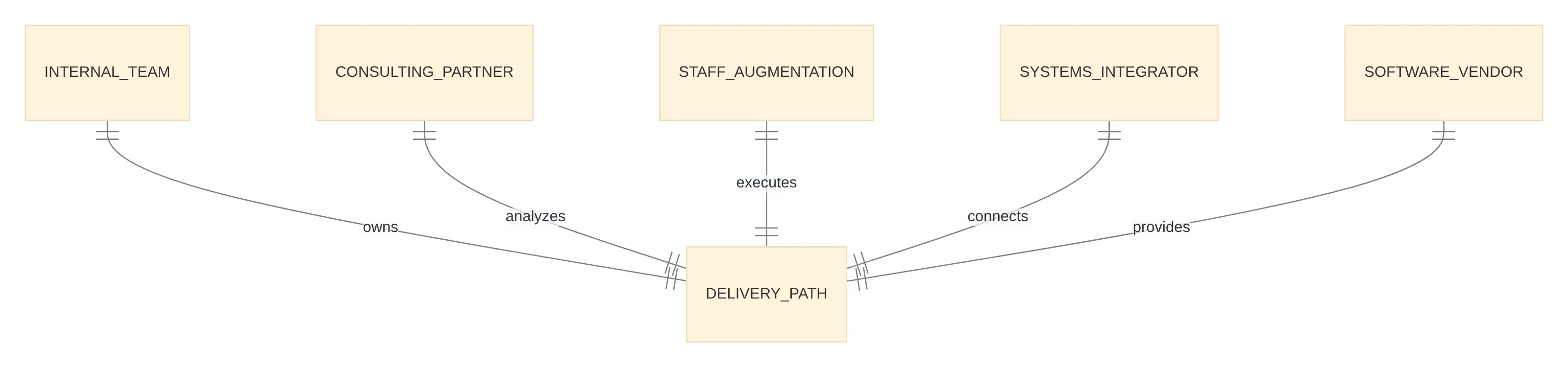
Software consulting helps you decide, design, and coordinate technology work; it is not automatically the same as adding developers or buying software. A consultant may analyze requirements, recommend strategies, improve or implement systems, manage projects, document requirements, provide technical support, or guide development teams. Staff augmentation has a narrower operating model: professionals join your existing team and execute defined work under your management. A software vendor provides a product and may provide a limited implementation, while a systems integrator connects a selected platform to your existing systems and data.
For a hedge fund, a useful starting point is an accountability map rather than a provider label. Record who owns requirements and technical direction, who performs defined work under client management, who supplies a product, and who connects a selected platform to existing systems and data. These roles can involve different outside parties, so write the boundaries between them before work begins. The map gives internal stakeholders a shared basis for discussing budget, access, risk, timing, and knowledge transfer.
The distinction affects accountability. Advice should produce a decision you can act on; execution should produce agreed work; a product should provide a defined function; and integration should connect that function to your operating environment. Write that expected result before comparing providers. A clear result also gives your internal stakeholders a common basis for discussing budget, access, risk, and timing.
What software consulting includes
Software consulting can span a project from planning through implementation methodology. The work may include requirements specification, use-case definition, data modeling, technical design, solution development, and implementation methodology. The scope can stay at the advisory level or extend into implementation and support, so you should not assume that every consulting team performs every activity. Ask the provider to separate recommendations, build work, implementation assistance, and ongoing support in its proposed scope.
A defined engagement can produce several kinds of deliverables, depending on the problem you bring:
- A current-state assessment that describes relevant systems, dependencies, constraints, and unresolved requirements.
- A requirements record that translates business and technical needs into testable statements.
- Use cases, data models, process maps, or architecture materials that clarify how a proposed solution should work.
- A shortlist or recommendation for software, an integration approach, or a delivery sequence.
- An implementation plan with responsibilities, dependencies, acceptance conditions, and decision points.
- Technical documentation, training, support guidance, or project reporting where those items are included in scope.
Treat each item as a proposed output, not as an automatic feature of the consulting label. For every deliverable, identify its intended user, the decision it should support, the information required to produce it, and the person who will accept it.
Software consultants may also evaluate current technology use, identify business needs, recommend software opportunities, and address defects, security weaknesses, or relevant upgrades. Those activities describe possible work, not a promise that a consultant will discover or resolve every issue. Ask which activities are included, which are excluded, and what information your team must provide before work begins. If implementation is included, define where the consultant’s responsibility ends and your production, operations, or security responsibilities begin.
When a hedge fund may need software consulting
Your hedge fund may need outside consulting when a technology question crosses team boundaries or carries consequences that make trial-and-error expensive. Typical triggers include:
- Data or analytics work that depends on several sources, unclear ownership, or inconsistent requirements.
- Architecture decisions involving application boundaries, system design, software selection, or integration.
- Security work involving access control, identity design, vulnerability assessment, remediation oversight, monitoring, or security within the development lifecycle.
- Delivery problems involving unclear requirements, competing priorities, weak handoffs, or uncertain project ownership.
- A proposed system change that requires a structured assessment before your team commits to implementation.
The practical test is whether you need accountable analysis and direction, not merely more hands to complete an already-defined backlog. If the main question is still what should change, why it should change, or how several systems should work together, an advisory or coordinated engagement may be more appropriate than adding execution capacity.
Data integration deserves a separate decision because it can connect operational systems, external data, analytics workflows, and downstream applications. At Neutech, we consider automated data integration fundamental for hedge fund managers navigating financial-services complexity. If integration is your concern, ask the consultant to define the systems in scope, the data movement or transformation required, ownership of data quality, monitoring responsibilities, and the decisions the resulting data must support. Do not treat the existence of a data pipeline as proof that the resulting information is fit for every analytical or operational use.
Security and compliance work can also justify a consulting assessment when you need to understand controls, identify gaps, or organize remediation. Security and compliance consulting may include control assessments, gap analysis against selected standards, risk-management processes, compliance project planning, and policy or procedure maintenance. Cloud-security responsibilities may include access-control design, vulnerability assessment, remediation oversight, monitoring, and integration of security into the software development lifecycle. Ask for a clearly bounded work product rather than accepting a general assurance that a proposed system will be compliant. Your scope should identify the control question being examined, the evidence to be reviewed, and the person responsible for the resulting decision. Use the trigger to determine the first artifact you need. A data-integration concern may call for a defined system and data boundary, ownership of data quality, and monitoring responsibilities before build work is approved. An architecture concern may call for documented alternatives, constraints, and decision rights. A security or compliance concern may call for a control assessment, gap record, and remediation ownership. A delivery concern may call for a dependency and responsibility map. These artifacts do not resolve every issue, but they expose whether the proposed engagement is still diagnosing the problem or is ready to implement a chosen approach. That distinction helps prevent implementation activity from becoming a substitute for an unresolved decision.
Match the technology problem to the outside role
The right outside role depends on what remains unresolved after you describe the problem. Consulting, staff augmentation, systems integration, and a software product can appear in the same project, but they answer different questions. Use the comparison below to identify the first role to evaluate. A project can move from one path to another, but that transition should be explicit rather than hidden inside a broad statement of work.
| Delivery path | Primary question | Expected accountability | Use this path first when | Request before selection |
|---|---|---|---|---|
| Internal team | Can your existing team define and deliver the work? | Your team owns the diagnosis, design, and execution. | The problem is understood and internal capacity, not direction, is the constraint. | A capacity plan, named owner, and delivery sequence. |
| Consulting partner | What should you build, change, or prioritize, and why? | The consultant analyzes, plans, and provides agreed direction or coordinated change. | The problem is ambiguous, cross-functional, or requires an external technical assessment. | Scope, assumptions, decision rights, and concrete deliverables. |
| Staff augmentation | Who can execute defined work inside your team? | Your team manages priorities and the augmented professionals execute assigned work. | The approach, backlog, tools, and internal ownership are already clear. | Skills, role boundaries, reporting model, and onboarding requirements. |
| Systems integrator | How will a selected platform connect to your systems and data? | The connection work is assigned within an agreed technical boundary. | You have selected or are close to selecting a platform and the integration is the main obstacle. | Integration architecture, dependencies, testing responsibilities, and handoff plan. |
| Software vendor | Which product provides the needed function? | The vendor provides the product and usually a defined implementation scope. | Your requirement maps to a product that you can evaluate and operate. | Product scope, implementation limits, data handling, support, and exit conditions. |
Do not choose a broader engagement merely because it sounds more capable. If your team can make the key decisions and only lacks execution capacity, staff augmentation may fit. If the central uncertainty is what to build or how to structure the change, consulting deserves priority. If the product is known but the connection is difficult, evaluate integration work. If the need is a defined function that can be evaluated independently, start with the product category. Record the chosen path and the reason before you invite proposals.
Define the deliverables and decision rights before selection
A consulting brief should define the work product before it defines the provider. Consulting may include requirements, data modeling, technical design, implementation guidance, project management, training, and support, but the engagement should state which of those activities apply to your problem. A broad statement such as improve our platform leaves too much room for different interpretations. A precise brief also helps your team distinguish a discovery engagement from implementation work and prevents a proposal from silently combining both.
Your brief should resolve five decisions:
- Problem boundary: Identify the systems, workflows, data, users, and business decisions in scope. Name the related areas that are outside scope.
- Deliverables: Specify whether you expect an assessment, requirements record, architecture recommendation, implementation plan, working software, integration, documentation, training, or another defined output.
- Decision rights: State who approves requirements, architecture, security exceptions, priority changes, acceptance, and production release.
- Acceptance conditions: Describe what must be present for each deliverable to be accepted, including required documentation, tests, review points, or demonstrations.
- Knowledge transfer: Define what your internal team must be able to operate, maintain, review, or extend after the engagement.
These decisions turn a general request into a scope that you can compare across providers. Add the assumptions that could change the work, such as access to systems, availability of subject-matter experts, data quality, and dependencies on other teams. Make knowledge transfer observable at each decision point, not a single final meeting. During current-state work, require a record of assumptions, dependencies, and unresolved requirements. During design, identify which architecture, data-model, or integration choices require internal approval. Before implementation, record access paths, control responsibilities, review points, and acceptance evidence. At handoff, confirm that internal owners can locate documentation, understand open risks, and take responsibility for operation or further change. This sequence connects deliverables to decision rights: a document is useful only when a named stakeholder can review it and use it to approve, reject, or continue the next step. It also helps distinguish a consulting output from an implementation output. A recommendation can be accepted without authorizing a production change; working software or an integration should not be treated as accepted until the stated tests, documentation, and ownership conditions are met. Ask each provider to show where these transitions occur in its method and proposal.
Include commercial and operating boundaries as well. A software-partner audit can examine pricing and contract compliance, code quality, delivery speed, standards adherence, communication, client satisfaction, and internal risk-mitigation practices. Use those dimensions to ask how performance will be reviewed, who owns unresolved issues, how changes affect scope, and what happens when the proposed approach no longer fits. A provider should be able to describe the review mechanism without replacing the deliverable with a general promise. State how disagreements are escalated and how your fund can pause, narrow, or end work if an assumption proves wrong.
Evaluate domain and technical fit through demonstrated work
Domain fit means more than recognizing financial terminology. Evaluate whether the proposed team can understand your data flows, operating constraints, software dependencies, control questions, and delivery context well enough to make useful decisions. Technical fit should cover the relevant application layer, architecture, data work, integration boundaries, and project responsibilities rather than a generic list of programming languages. For a regulated, data-intensive environment, ask how the team will separate technical assumptions from decisions that require internal risk, compliance, or operations ownership.
Ask for demonstrated work in a form you can examine:
- A comparable problem description showing the starting condition, assigned scope, decisions made, and delivered outputs.
- The roles of the people who performed the work, including who would actually join your engagement.
- Examples of technical documentation, architecture decisions, requirements records, or delivery reports that can be shared without exposing confidential information.
- A description of how the team handled changing requirements, defects, dependencies, standards, and escalation.
- References or client contacts who can discuss communication, delivery behavior, and the quality of the handoff.
Do not treat a sector logo, a tool list, or a senior title as proof that the proposed team fits your specific problem. Ask what the named team members personally delivered, what decisions they owned, and which parts of the example are comparable to your environment.
We provide senior software designers and developers to augment product and development teams. That offering fits an execution path when your team has defined the work and wants additional professionals inside the delivery effort. It does not remove the need to specify whether your engagement requires diagnosis, technical direction, implementation, or team augmentation. If you approach us, describe the work in those terms so the proposed role can be evaluated against the actual need.
Make security and compliance evidence part of the evaluation
Security and compliance should appear in the work plan, not only in the provider overview. Security and compliance consulting may include project planning, control and practice assessments, gap analysis against a selected certification standard, risk-management processes, and security-policy or procedure work. Cloud-security work may include identity and access design, vulnerability assessment, remediation oversight, monitoring, and security integration throughout the software development lifecycle. Match each activity to the systems, data, environments, and access paths in your proposed scope.
Your evaluation should ask questions that connect controls to the proposed work:
- What data, environments, accounts, repositories, and operational interfaces will the team access?
- Which control objectives or internal policies shape the design?
- Who identifies vulnerabilities, assigns remediation ownership, and decides when a finding is closed?
- How will identity, access, logging, alerts, secrets, and change records be handled within the scope?
- Which security activities belong to the provider, and which remain with your team or another specialist?
- What documentation will allow your team to review the decisions and operate the result?
The answers should identify responsibilities and review points. They should not be reduced to a claim that a provider can make your fund compliant. Ask for the evidence that supports each material assertion, and record the control decisions that remain with your own authorized stakeholders.
Vendor due diligence can combine a security questionnaire, objective security-rating information, and external attack-surface analysis. A questionnaire may cover incident response, breach history, governance, and security practices. Use those inputs alongside the proposed scope and access model. A questionnaire alone does not explain how the specific project will protect your systems, data, or operating processes. Compare the requested access with the provider’s stated controls, and require a clear owner for reviewing unresolved findings before access is granted. Organize this review in two passes. Before selection, use the questionnaire, rating information, and attack-surface analysis to identify questions about the provider’s general posture. After the scope is defined, map each requested access path and project activity to evidence, a control owner, and a review point. This prevents a favorable general assessment from being used as evidence for an unrelated project. For example, incident-response documentation may show how a provider addresses incidents, while it does not by itself establish how data access or logging will be handled in the proposed work. Record what each item proves, what it does not prove, and what follow-up is required. The resulting record gives internal security and operations stakeholders a basis for accepting, limiting, or rejecting the proposed boundary without treating the consulting proposal as a compliance conclusion.
Test delivery ownership and internal-team fit
Delivery ownership is the clearest boundary between consulting and staff augmentation. Staff augmentation extends an existing team with professionals who execute defined tasks under your management. Consulting focuses on analyzing, planning, and leading broader business or technology change. Before selection, decide whether you want the outside team to recommend the path, own a defined workstream, perform assigned work, or combine those roles under separate decision rights. If the engagement combines roles, mark the point at which advisory responsibility changes into delivery responsibility.
Your operating-model test should use a short scenario rather than a presentation. Ask the proposed team to explain what happens when requirements conflict, a dependency is late, a security issue appears, or an internal owner rejects a deliverable. Look for named responsibilities:
- Who sets priorities and approves changes?
- Who makes technical decisions when the internal team and provider disagree?
- Who reviews code, architecture, controls, and documentation?
- Who communicates status, risks, and decisions to investment-operations or executive stakeholders?
- Who owns the result after the provider leaves?
A good fit makes those answers visible before work starts. If the provider expects your team to make every material decision, you may be buying execution rather than consulting. If your team expects the provider to make decisions that require internal authority, clarify that boundary before the engagement begins.
Communication and client relationships belong in the evaluation because delivery quality is not only a technical question. Ask how the provider records decisions, reports progress, surfaces risk, handles disagreement, and measures whether stakeholders understand the result. Match the engagement to your internal capacity: a consulting team should not create an unowned stream of recommendations, and an augmented team should not be expected to define a strategy that your organization has not approved. Set a regular decision and escalation rhythm that fits the people who must approve scope, risk, and release.
Build a verification brief before initiating the engagement
A verification brief gives you a consistent way to compare a proposed partner with the problem you actually need to solve. Prepare one before introductory calls or requests for proposals. Keep it short enough to use, but specific enough to expose assumptions. Give the brief to each serious candidate and compare answers against the same scope, access model, decision rights, and acceptance conditions.
Your verification brief should include these questions and requested materials:
- Problem and scope: What decision, system, workflow, or delivery failure must the engagement address? What is outside scope?
- Relevant work: Which comparable projects did the proposed team perform, and what did it actually deliver?
- Team assignment: Who will do the work, what will each person own, and who provides technical or delivery oversight?
- Method: How will the team move from discovery to requirements, design, implementation, review, and handoff?
- Technical proof: Which architecture materials, code samples, test records, or integration plans can the provider share?
- Security proof: What access will be needed, how will it be controlled, and what information can the provider provide about incident response, governance, and security practices?
- Operating fit: How will communication, status, escalation, approvals, and internal-team collaboration work?
- Commercial boundary: What is included, what changes the scope, how will contract compliance be reviewed, and what assumptions affect price or schedule?
- Acceptance and exit: How will you accept the work, transfer knowledge, and close or extend the engagement?
The purpose is not to collect the longest questionnaire. The purpose is to expose the conditions under which the proposed work can succeed. Request enough detail to make a decision, but do not ask for confidential material that is unrelated to the proposed access or work.
Your selection record should score the answers against your own decision criteria rather than allowing a polished proposal to set them for you. Record unresolved questions, required follow-up, and the person responsible for each decision. Separate confirmed facts, provider assertions, assumptions, and open issues. If a provider cannot explain its scope, ownership, security boundary, or handoff, pause selection until those points are clear. Separate fit from proof in the record. For each criterion—domain, technical, security, operating, or commercial—capture what the engagement requires, the provider’s response, the supporting evidence, the unresolved risk, and the decision owner. A high-level assertion can be relevant but unverified; a reference can speak to communication but not architecture. Do not let strong evidence in one dimension compensate for a missing answer in another when the missing answer concerns access, decision rights, acceptance, or handoff. This preserves the distinction between provider capability, project scope, and internal authority. It also makes a later decision explainable: you can show why the selected path fits and which questions remain open.
Separate current obligations from proposed rules and provider claims
The SEC material cited here describes a proposed cybersecurity risk-management rule, not a determination of current law. The proposal would have required advisers and funds to review cybersecurity policies and procedures at least annually and prepare a written report assessing their design and effectiveness. Do not present that proposal as a current obligation for your fund. Separate enacted requirements, applicable regulatory expectations, internal policies, contractual duties, and proposed rules in your review record.
Provider claims require the same separation. A statement that a team performs gap analysis, policy work, cloud-security design, or vendor due diligence describes a possible service; it does not determine your legal duties or prove that your environment meets them. Ask the provider to identify the exact work product, assumptions, control boundary, and responsible approver. Keep legal, regulatory, investment, cybersecurity, and technology conclusions with the qualified people who have authority to make them.
Your dated decision record should label each item as an internal requirement, a provider capability, a proposed approach, an unresolved question, or a rule that needs professional interpretation. This prevents a proposal, marketing statement, or draft control plan from becoming an accidental compliance conclusion. Link each material decision to the scope, owner, and review date that apply to it.
Make the next step a bounded partner conversation
Use an accountability-and-acceptance model to make the delivery path explicit: assign who diagnoses the problem, sets technical direction, performs implementation or integration, reviews security and compliance controls, and accepts the resulting work. This separates consulting’s analysis, planning, and technical direction from staff augmentation’s execution under the client’s management, while a systems integrator connects a selected platform to existing systems and data and a software vendor provides the product and usually a narrow implementation. Record the expected deliverables, decision rights, security boundary, internal owner, and acceptance conditions in a verification brief, then ask any proposed partner to show which responsibilities it will own and what knowledge it will transfer to the internal team.