
Start with the decision company analytics must support
Company analytics is relevant to your hedge fund when it connects a defined business or investment decision to trustworthy data, interpretable analysis, accountable controls, and monitored use. The test is not whether a dashboard, forecast, or model looks sophisticated. The test is whether you can trace a decision from a specific question through its data and analytical method to an action with an identifiable owner.
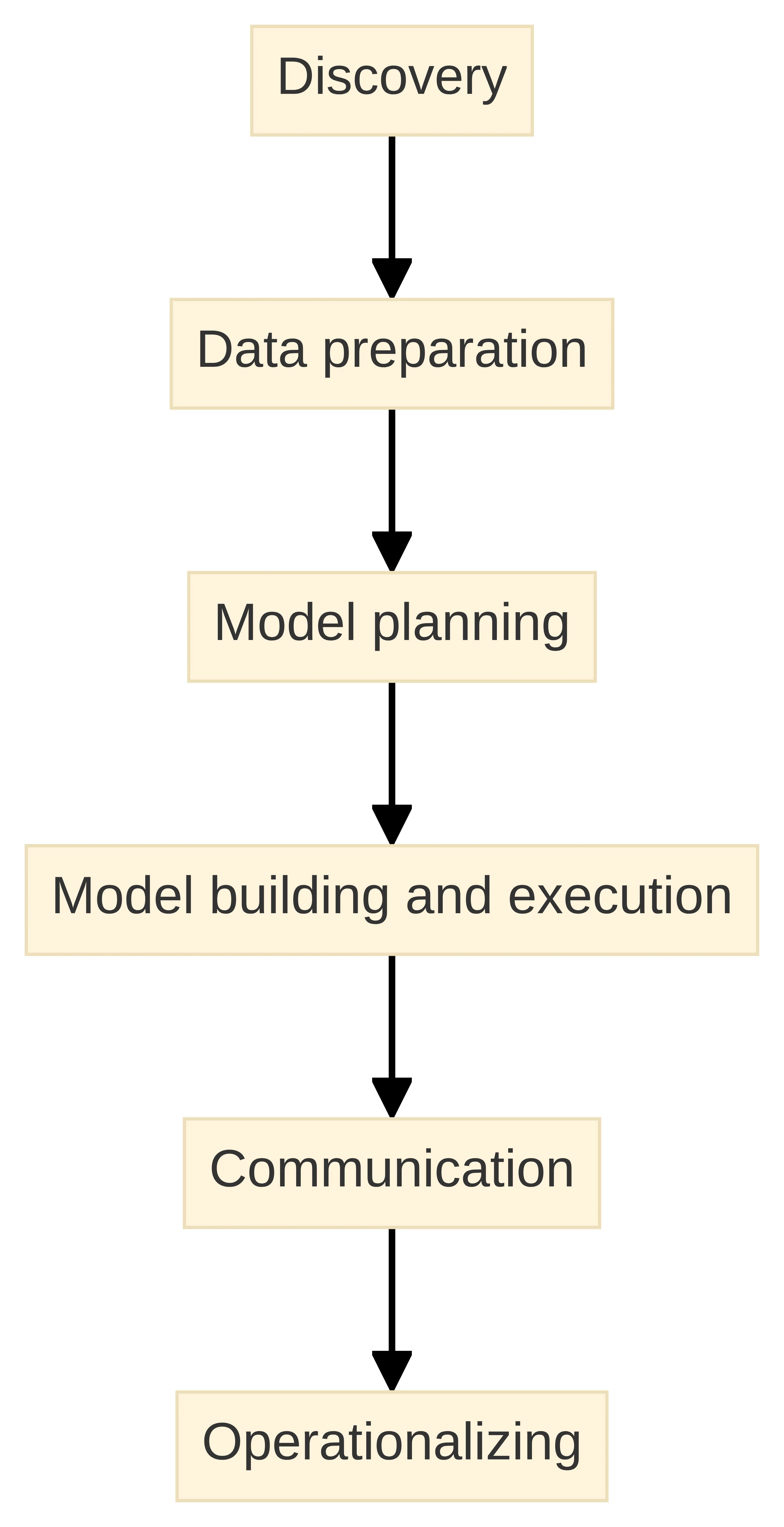
Business analytics uses statistical methods, technologies, and practices to analyze historical data and generate insights for strategic decision-making. A practical analytics lifecycle then moves from defining the objective and identifying data sources to preparing data, selecting and running an analytical model, communicating findings, and operationalizing a validated model on production data.
For a hedge fund, the decision may concern investment analysis, risk management, operations, or reporting. Those categories describe different decision environments, not guaranteed outcomes. An analytics initiative may be relevant even when it does not produce a prediction; a reliable view of what happened, why it happened, or what must be investigated can be useful when the question and response are explicit.
Start by writing one sentence in this form: We need to decide [what], using [which information], by [when], and the decision belongs to [which role]. If you cannot complete that sentence, do not begin with tool selection. Define the decision first.
Define company analytics without collapsing related disciplines
Company analytics is a useful working term for applying data, statistical methods, technologies, and analytical practices to questions about an organization and its decisions. The emphasis is not on a particular product or model. It is on turning relevant information into an interpretable basis for action.
That definition separates the capability from the data itself. A warehouse, database, market feed, or reporting store can hold information without answering a decision question. It also separates analytics from a presentation layer. A dashboard may display the result, but the underlying work still depends on the question, source data, preparation, analysis, interpretation, and control around use.
Business intelligence and data analytics overlap, but they can be framed differently for planning purposes. Data analytics typically addresses specific, recurring questions, while business intelligence focuses more broadly on company direction and operations. Data analytics can include predictive and prescriptive analysis, while business intelligence tends to emphasize descriptive, historical information.
For your fund, use business intelligence when the need is broad visibility across operations and use data analytics when the need is a defined question that must be answered repeatedly or examined in depth. The distinction is practical rather than a reason to create separate organizational silos. A single reporting environment may support both.
Data science is best treated here as an overlapping method area rather than a substitute for governance. The analytics lifecycle can select a SQL, statistical, or machine-learning model according to the dataset, its structure, and the expected output. A data-science workstream may therefore be appropriate when the question requires statistical or machine-learning modeling, but the model still needs a defined purpose, accountable ownership, validation, communication, and monitoring.
The useful boundary is simple: business intelligence frames broad organizational visibility, data analytics answers a defined question, and data science may provide modeling methods for that question. None of those labels, by themselves, establish data quality, security, auditability, or suitability for a specific fund.
Use four analytics questions to classify the work
The four-category classification gives you a quick way to match analytical work to the question it should answer. Descriptive analytics asks what happened. Diagnostic analytics asks why it happened. Predictive analytics asks what may happen next. Prescriptive analytics asks what action should be taken.
Treat the categories as a progression of questions, not as a ranking. A prescriptive recommendation is not automatically more useful than a descriptive report. If your decision depends on establishing a reliable historical record, descriptive work may be the appropriate scope.
| Category | Question | Typical output | Hedge-fund application |
|---|---|---|---|
| Descriptive | What happened? | Dashboards, scorecards, and period comparisons | Review positions, activity, operational events, or reporting data |
| Diagnostic | Why did it happen? | Root-cause views, drill-down paths, and cohort analysis | Investigate a variance, exception, or change in an operating measure |
| Predictive | What may happen next? | Forecasts, risk scores, and scenario models | Examine possible exposures, demand, or operating conditions |
| Prescriptive | What action should be taken? | Recommended actions or optimized plans | Compare possible responses against stated constraints and ownership |
Each category carries a different decision risk. Descriptive work can become a reporting exercise that never explains a result. Diagnostic work can confuse correlation with causation. Predictive work can be over-trusted without operational follow-through. Prescriptive work can recommend actions that ignore real-world constraints, governance, or change management.
Write the category and its boundary into the assignment. For example, if your aim is to understand a recurring reporting variance, begin with descriptive and diagnostic questions rather than commissioning a predictive model. If the desired output is an action recommendation, name the person who can accept, reject, or modify that recommendation.
Map the fund’s use case before selecting an approach
A useful use-case map links the decision to its operating conditions. Before choosing a method, record:
- Decision: What will change after the analysis is reviewed?
- Decision owner: Who is accountable for acting on the result?
- Question: What must the analysis establish, compare, explain, or estimate?
- Inputs: Which internal records, market-information feeds, operational systems, or manually maintained files are in scope?
- Timing: Is the answer needed once, on a recurring schedule, or in response to an event?
- Output: Will the result be a report, investigation view, forecast, risk score, scenario, or recommendation?
- Boundary: What will the analysis not decide, authorize, or guarantee?
For investment analysis, the map might define the information needed to examine a stated investment question and the role responsible for interpreting it. For risk management, it might define the exposure or exception to be monitored, the review cadence, and the escalation owner. For operations, it might focus on recurring breaks, processing conditions, or information flows. For reporting, it might specify the reporting population, period, reconciliation point, and approving role.
These examples do not promise improved returns, lower risk, or faster operations. They establish the conditions under which an analytical result can be judged useful. Keep the first assignment narrow enough that you can identify the source records, review the output, and decide what happens when the result is incomplete or unexpected.
Choose the analytical category after you have written the question. A broad operational view may call for business-intelligence reporting. A specific recurring question may call for data analytics. A question about likely future conditions may require predictive analysis, but only if the data, validation approach, and decision owner can support that use. Do not use a more advanced label to compensate for an undefined decision.
Follow the evidence from source data to decision use
A practical analytics lifecycle gives your initiative a sequence that can be reviewed before production use:
- Discovery: Define the business objective, identify relevant data sources, assess gaps, and formulate the hypothesis that will guide the analysis.
- Data preparation: Collect source data, load it into an analytics environment, remove nulls where appropriate, and standardize field formats before modeling.
- Model planning: Select a SQL, statistical, or machine-learning approach based on dataset size, structure, and expected output.
- Model building and execution: Build the selected model, train it where required, run it against the dataset, and compare the result with the initial hypothesis.
- Communication: Present findings through visualizations and narrative explanation, including an assessment of confidence against the original criteria.
- Operationalizing: Run a validated model on production data when the use case is ready for operational deployment.
For each phase, retain the item that lets you explain what happened. Discovery should leave a written objective and hypothesis. Preparation should identify the source fields and transformations. Model planning should record why the selected approach matches the expected output. Communication should state the result, its interpretation, and its limits. Operational use should identify who monitors the result and what happens when it falls outside the expected conditions.
That principle translates into a useful design question for your fund: who owns the analytical asset after the initial project ends? If the answer is nobody, the lifecycle stops before dependable decision use.
Monitoring should be part of the operating design rather than an afterthought. Define what will be reviewed, who performs the review, how exceptions are recorded, and when the analytical approach must be reassessed. The exact control depends on the use case and organization. The boundary is clear: deployment is not the same as accountable ongoing use.
Make integration and data quality the first operational test
Neutech’s hedge-fund guidance identifies automated integration across trading platforms, market-information feeds, and internal databases as essential for optimizing information flows. Use that source-system boundary as a prompt, not as a claim that automation alone makes an analytics capability reliable.
Map where each input originates, how it enters the analytics environment, which transformation it receives, and who owns the source. A result can be technically available while still being unsuitable for a decision if the source is incomplete, the field meaning changes between systems, or the timing is unclear.
Data governance and data quality belong in the first operational test. Relevant governance guidance includes ISO/IEC 25012:2008, ISO/IEC 38505-1:2017, and ISO/IEC TR 38505-2:2018 for data quality, governance, and data accountability.
You do not need to begin by adopting a standard name. Begin by asking whether you can describe the quality conditions that matter for the decision:
- Are the relevant records present for the stated period?
- Do fields use consistent definitions and formats across source systems?
- Can you identify the responsible owner for each material input?
- Can you trace a reported value back to its source and transformation?
- Can you record an exception instead of silently passing it through?
If your fund consumes Brazil or wider LATAM data, include source-local timestamps, local market calendars, and the handoff to the fund’s operating timezone in the integration map. An EST-aligned operating schedule should make conversion and ownership explicit. If an external engineering team handles the work, define English-first documentation and communication expectations alongside the data contract; those are operating conditions, not evidence that the analysis will produce a particular result.
Evaluate governance as part of the analytics capability
Governance determines who is accountable for data, definitions, access, changes, and decision use. Governance guidance highlights data accountability as a central consideration and connects governance with data-quality management. That makes governance part of the analytics capability, not a document added after the dashboard or model is built.
For each material dataset and analytical output, record an owner, permitted use, definition, change history, and review path. If multiple teams use the same field differently, resolve that interpretation before comparing results. If no role can approve a change, the control boundary is incomplete.
A practical governance map should answer these questions:
- Accountability: Who accepts responsibility for the data and the analytical output?
- Definitions: What does each material field, measure, and exception mean?
- Access: Which roles may view, change, export, or administer the information?
- Change: Who approves changes to source fields, transformations, models, or thresholds?
- Evidence: What records show the version used, the review performed, and the decision made?
- Retention: How long must the relevant records and review evidence remain available under your applicable requirements?
The last question is a policy decision for your organization, not a universal retention period. Keep it separate from the technical design so that a change in policy does not require an unexplained change in the analytical result.
Interpretability is also a governance concern. A stakeholder should be able to understand what question the result answers, what information it used, what assumptions shaped it, and which role can act on it. For models that require validation and ongoing monitoring, assign those responsibilities before production use. A visually clear output without accountable interpretation is still an incomplete control.
Apply security and model oversight across the lifecycle
The cited SEC material is proposal material describing cybersecurity policies and procedures for advisers and funds. It also recognizes that firms may need to tailor their risk-management approach rather than follow one universal method. Its status on October 27, 2026 should be checked before you rely on it as a statement of a requirement in force.
For analytics planning, the practical implication is to include cybersecurity in the use-case boundary from discovery onward. Identify the systems, information, roles, and data flows involved; define the control owner; and record how an incident, access change, or material data issue affects analytical use. Do not postpone those questions until after integration.
The scope matters. Do not copy a banking-organization framework into a hedge fund without assessing the fund’s own obligations and governance structure. Do use the underlying questions: who develops the model, who validates it, who approves production use, who monitors it, and who can stop or revise it when the conditions change?
Neutech’s hedge-fund guidance recommends encryption, access controls, and regular audits as organization-wide security measures. It also recommends annual IT assessments to identify vulnerabilities and document findings for compliance and SEC audits. Treat those as attributed recommendations, not as a universal schedule or a substitute for your own control assessment.
Apply the same discipline to analytics access. Define who can reach source data, prepared data, model inputs, outputs, and administrative functions. Record access changes and review exceptions. The objective is not to attach a security label to the project; it is to make the information path and responsibility visible.
Test whether the capability fits the fund’s operating requirements
Evaluate the capability against the fund’s actual operating requirements rather than against a feature list. Use these questions:
- Data quality: Can the process identify missing, inconsistent, or ambiguous inputs before they affect the result?
- Integration: Can it connect the relevant source systems with documented ownership and transformations?
- Governance: Can you assign responsibility for definitions, changes, access, validation, and review?
- Security: Can the design restrict access and record material activity across the information path?
- Scalability: Can the operating process handle the expected data volume, frequency, and number of users without changing the decision boundary invisibly?
- Usability: Can the intended decision owner interpret the output and act on it within the required time?
- Auditability: Can you reconstruct the source, version, transformation, review, and decision associated with a result?
Separate technical availability from operating fit. A model may run successfully while the decision owner cannot interpret its output, the input arrives too late, or no role is assigned to investigate an exception. The analytics lifecycle places communication before operationalizing a validated model on production data; the model-risk guidance places accountability across development, validation, and monitoring. Together, those premises support a simple threshold: do not treat a functioning pipeline as a functioning decision process.
If external resources contribute to the work, retain internal oversight of the analytical objective, data access, validation, approval, and monitoring. Federal Reserve guidance makes that expectation explicit for banking organizations using external resources. For a fund, the same question is useful even when the applicable governance regime differs: which decisions remain inside the organization, and what evidence will the outside team provide for review?
Write those boundaries into the assignment before access is granted. Do not let a delivery arrangement quietly transfer decision accountability.
Run a decision-to-control readiness test
Use a seven-part readiness test before expanding an analytics initiative. Mark each item ready, unresolved, or out of scope, and attach the evidence or decision record that supports the mark.
- Decision: You can state the decision, question, timing, and intended output in plain language.
- Owner: A named role can interpret the result and decide what happens next.
- Data: You have identified the source systems, material fields, definitions, and known gaps.
- Integration: You can explain how information moves from each source into the analytical environment.
- Governance: You have assigned responsibility for access, changes, validation, exceptions, and review.
- Security: You have defined the relevant access boundaries, activity records, and incident response ownership.
- Auditability: You can reconstruct the inputs, transformations, version, review, and decision for a material result.
Use the result to choose a bounded next action:
- If the decision is unresolved, interview the decision owner and write a one-sentence objective before selecting a data source or method.
- If the data is unresolved, inventory the sources, definitions, gaps, and owners before building a model.
- If integration is unresolved, map the source-to-output path and assign responsibility for each handoff.
- If governance is unresolved, create an accountability and change map before operational use.
- If security is unresolved, define access, activity records, and incident ownership before granting analytical access.
- If auditability is unresolved, specify the evidence needed to reconstruct a material result and decision.
- If every item is ready, define the smallest production-relevant assignment that tests the stated question without expanding the scope silently.
This test measures readiness for a defined analytical assignment; it does not certify regulatory compliance, validate an investment thesis, or guarantee a business result. It also does not require every fund to use the same architecture. The value of the test is that it exposes the unresolved condition before that condition is hidden inside a dashboard, model, or integration project.
Recognize when analytics will not answer the real problem
Analytics will not resolve an undefined decision, an unowned action, or a disagreement about what a measure means. It will also not make incomplete or inconsistent source data reliable merely by placing that data in a more advanced model. When the problem is a missing definition, assign the definition. When the problem is a missing control, design the control. When the problem is a missing decision owner, resolve ownership before expanding the analysis.
The category of work also sets a limit. Descriptive analytics can show what happened without explaining why. Diagnostic analysis can identify an association without proving causation. Predictive analysis can estimate what may happen next without establishing that the forecast will occur. Prescriptive analysis can suggest an action without possessing authority to take it or knowledge of every operational constraint.
Pause the initiative when any of these conditions applies:
- The requested output has no identified decision or review cadence.
- Different teams use the same field or metric with incompatible meanings.
- The source path cannot be traced well enough to explain a material result.
- The proposed model is more complex than the question requires and its assumptions cannot be reviewed.
- The output has no owner, escalation path, or documented response to an exception.
- The project is being used to avoid resolving a policy, governance, or accountability question.
A pause is a scope decision, not a failure of analytics. Return to the smallest question that can be answered with identified data, a named owner, and a reviewable control path.
Do not use a readiness score as a substitute for judgment. A fund may be ready for a descriptive reporting assignment while remaining unready for a predictive or prescriptive use. Make the decision by matching the analytical ambition to the quality of the data, the strength of the controls, the available review capacity, and the consequence of acting on an incorrect result.
Turn the assessment into a bounded next step
Company analytics deserves further evaluation when you can name the decision, identify the data path, assign accountability, define security and governance controls, and explain how the result will be monitored in use. Start with the narrowest question that matters to your fund. Then document the source systems, quality conditions, analytical category, decision owner, review evidence, and operating boundary.
A qualified professional should determine your organization’s individual legal, regulatory, investment, and model-governance suitability. Use this guide to structure the questions and evidence that those reviews require, not to replace them.
For a hedge fund with a defined analytics decision, the next step is to turn that decision, its data sources, control expectations, ownership boundaries, and acceptance criteria into a bounded assignment. That brief gives you a concrete basis for deciding what should be investigated, built, validated, or left out.
What should a hedge fund verify before evaluating company analytics?
What is company analytics and how does it differ from business intelligence?
Company analytics refers to the application of data, statistical methods, technologies, and analytical practices to address specific organizational questions and decisions. It differs from business intelligence, which focuses on broader company direction and operations, while company analytics typically addresses specific, recurring questions.
What are the main categories of analytics relevant to hedge funds?
The main categories of analytics include descriptive analytics (what happened?), diagnostic analytics (why did it happen?), predictive analytics (what may happen next?), and prescriptive analytics (what action should be taken?). Each category serves a different purpose in decision-making.
What is the practical analytics lifecycle for implementing company analytics?
The practical analytics lifecycle includes six phases: discovery (defining objectives and identifying data sources), data preparation (collecting and transforming data), model planning (selecting the analytical model), model building and execution (running the model), communication (presenting findings), and operationalizing (deploying the validated model).
What are common implementation challenges for analytics initiatives in hedge funds?
Common implementation challenges include ensuring data quality, integrating diverse data sources, establishing effective governance, managing security risks, and ensuring scalability to handle increasing data volumes and user demands.
What steps should hedge funds take to assess their readiness for analytics initiatives?
Hedge funds should conduct a readiness assessment that includes defining the decision to be made, identifying data sources, assigning ownership, ensuring integration and governance, establishing security measures, and confirming auditability of the analytics process.